Brims, UPF and what shade a hat really gives
What the federal guidance says about ultraviolet light, what a UPF number describes, and how wide a brim has to be to matter.
What reaches you, and when
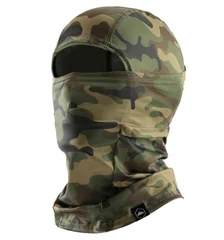 Balaclavas10 pieces · from $6.99
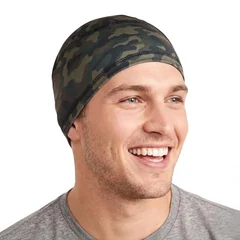 Beanies21 pieces · from $4.99
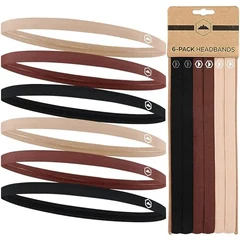 Headbands13 pieces · from $3.95
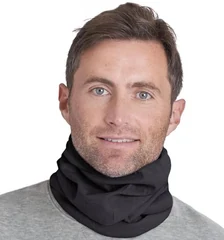 Neck gaiters6 pieces · from $5.99
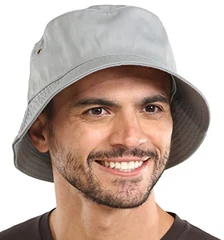 Sun hats9 pieces · from $6.99
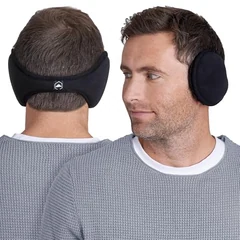 Ear warmers1 pieces · from $7.99
People buy sun cover in July and need it in March. The reason is in one sentence from the national health agency, and it is the least intuitive fact in this guide.
“Almost all the UV radiation that reaches earth is UVA though some UVB radiation reaches earth.”
Centers for Disease Control and Prevention, UV Radiation. Read 14 September 2026.
UVA is the constant one. It is there under cloud, it is there in spring, and it is the reason the same agency puts the advice in the calendar rather than in the season.
The advice, word for word
| Wording on the product page | Pieces | From |
|---|---|---|
| Fleece lined | 17 | $5.99 |
| Thermal build | 9 | $6.29 |
| Moisture wicking | 25 | $3.95 |
| Breathable panel | 36 | $4.99 |
| Wind resistant | 10 | $6.29 |
| UPF sun protection | 12 | $4.99 |
| Fits under a helmet | 14 | $4.99 |
| Four-way stretch | 19 | $4.99 |
The guidance names a hat specifically, and it names the parts a hat is supposed to shade.
“Wear a wide brim hat to shade your face, head, ears, and neck.”
Centers for Disease Control and Prevention, UV Radiation. Read 14 September 2026.
“Protect yourself and others from the sun by staying in the shade, wearing a wide-brimmed hat, or applying sunscreen year-round.”
Centers for Disease Control and Prevention, UV Radiation. Read 14 September 2026.
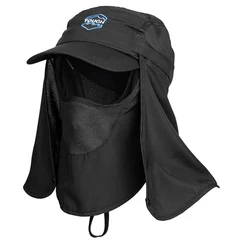
Face, head, ears and neck. A cap with a front brim covers the first of those and leaves the other three out. That gap is what the bucket shape answers, and it is why several pieces here add a flap at the back.
10 pieces on this site are built against light rather than cold, and 12 of them carry a UPF number from the maker.
What a UPF number is, and what it is not
UPF describes fabric. It is a laboratory measure of how much ultraviolet light gets through a piece of cloth, and it is a real number that a real test produced.
It is not a measure of a day outdoors. The rating says nothing about the part of you the brim does not cover, nothing about reflected light off water or snow, and nothing about how long you stood there.
So the honest way to read a UPF hat is narrow: under this brim, this cloth blocks most of what hits it. Everything outside the shadow is a separate question with a separate answer.
Brim width, in plain terms
A brim casts a shadow, and the size of the shadow is roughly the width of the brim. That is the whole geometry, and it explains the trade.
A wide brim shades ears and neck and gets in the way when you look up, so nobody hikes a steep trail in one. A short brim keeps the view and leaves the ears out. A flap does the back of the neck without adding width at the front.
We publish the shape the maker names and the rating the maker states. We do not publish a shade figure of our own, because measuring one properly takes a laboratory and we do not have one.
Colour, water and the light that comes from below
| Wording on the product page | Pieces | From |
|---|---|---|
| Fleece lined | 17 | $5.99 |
| Thermal build | 9 | $6.29 |
| Moisture wicking | 25 | $3.95 |
| Breathable panel | 36 | $4.99 |
| Wind resistant | 10 | $6.29 |
| UPF sun protection | 12 | $4.99 |
| Fits under a helmet | 14 | $4.99 |
| Four-way stretch | 19 | $4.99 |
Two things undo a good hat, and neither is on the label.
The first is reflected light. Water, pale sand and snow send light upward, and a brim shades none of it. This is the reason a wide hat on a boat feels less effective than the same hat on a trail, and it is why the underside of the chin burns on the water.
The second is what wet fabric does. Cloth that is soaked lets more ultraviolet through than the same cloth dry, and a stated rating is a dry-cloth rating. A hat you have been swimming in is not the hat the laboratory measured.
Colour helps at the margins: dark and saturated cloth absorbs more than pale cloth of the same weave. We do not put a number on that, because the number depends on the dye and the fibre and nobody published one for these pieces.
Fit, in the one way that matters here
A sun hat has exactly one fit problem, and it is wind. A brim is a sail, and a hat that lifts is a hat you take off and carry.
The features that answer that are a chin cord, a drawcord at the crown, or a shape with enough depth to grip. Where a piece has one, the maker names it and so do we. Where none is named, assume the hat is for still days and shade, not for a beach in an onshore breeze.
Of the sun pieces here, prices run from the low teens upward, and the deciding difference between the cheap and the dear end is usually the brim construction rather than the cloth.
Pieces this guide is about
Everything we hold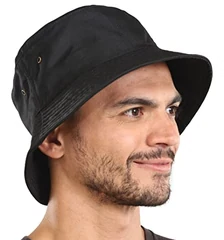
Sources
- UV Radiation, Centers for Disease Control and Prevention. Read 14 September 2026.