What a hat actually does in the cold
The federal guidance on working in cold, quoted word for word, and what it means for the piece you put on your head.
Start with the part nobody argues about
Head cover is the one piece of cold weather kit that almost every official guide names on its own line. Not as a style note and not as an afterthought: as a thing to do before you go out.
The national institute that writes the occupational guidance on working in cold puts it in eight words, and the sentence is worth reading exactly as it stands rather than in summary.
“Wear a hat. Hats reduce body heat escaping from your head.”
National Institute for Occupational Safety and Health, CDC, Cold and Work: Types, Causes, Preparation. Read 14 September 2026.
That is the whole claim, and it is a modest one. A hat slows the loss of heat that is already leaving. It does not add warmth, it does not replace a coat, and it does not make cold air safe to stand in for an hour.
Ears, face, neck: the parts that go first
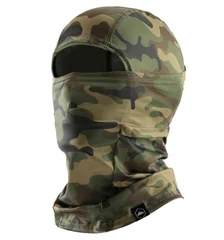 Balaclavas10 pieces · from $6.99
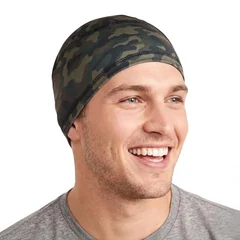 Beanies21 pieces · from $4.99
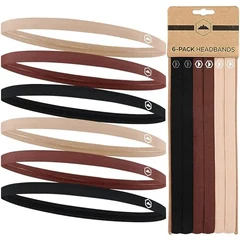 Headbands13 pieces · from $3.95
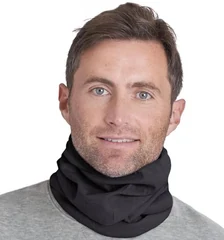 Neck gaiters6 pieces · from $5.99
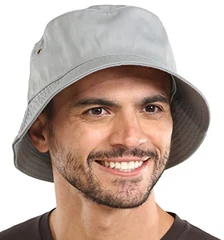 Sun hats9 pieces · from $6.99
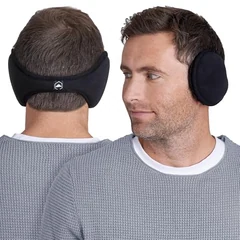 Ear warmers1 pieces · from $7.99
The same guidance is specific about which parts of you need covering, and the list is not the one most people would write from memory.
“Make sure to protect the ears, face, hands, and feet.”
National Institute for Occupational Safety and Health, CDC, Cold and Work: Types, Causes, Preparation. Read 14 September 2026.
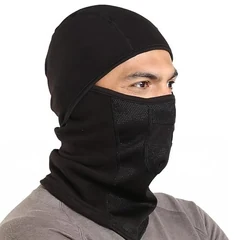
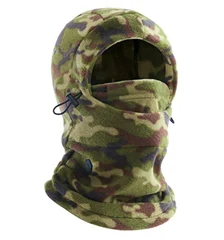
Ears and face come first in that sentence, and they are exactly the parts a plain beanie leaves out. That is the gap a balaclava, a gaiter or an ear band fills, and it is why this range splits into shapes rather than sizes.
Of the 60 pieces here, 10 cover the face in some form and 6 cover the neck. The rest cover the crown and the ears and leave the face to you.
Layers, and the catch in them
| Wording on the product page | Pieces | From |
|---|---|---|
| Fleece lined | 17 | $5.99 |
| Thermal build | 9 | $6.29 |
| Moisture wicking | 25 | $3.95 |
| Breathable panel | 36 | $4.99 |
| Wind resistant | 10 | $6.29 |
| UPF sun protection | 12 | $4.99 |
| Fits under a helmet | 14 | $4.99 |
| Four-way stretch | 19 | $4.99 |
The second piece of guidance is about how the layers work together, and it comes with a warning attached that is easy to skip past.
“Wear several layers of loose clothing for better insulation.”
National Institute for Occupational Safety and Health, CDC, Cold and Work: Types, Causes, Preparation. Read 14 September 2026.
“Some clothing may restrict movement, which could be dangerous.”
National Institute for Occupational Safety and Health, CDC, Cold and Work: Types, Causes, Preparation. Read 14 September 2026.
On a head this reads plainly. A thin skull cap under a helmet is a layer that does not restrict anything. A thick hat under the same helmet lifts the shell, and a shell that rocks is worse than a cold crown.
14 pieces here are named by the maker for wear under a helmet or a hard hat. That wording is theirs, and the product page repeats it rather than paraphrasing it into a promise.
What the fabric words mean, and where they stop
| Wording on the product page | Pieces | From |
|---|---|---|
| Fleece lined | 17 | $5.99 |
| Thermal build | 9 | $6.29 |
| Moisture wicking | 25 | $3.95 |
| Breathable panel | 36 | $4.99 |
| Wind resistant | 10 | $6.29 |
| UPF sun protection | 12 | $4.99 |
| Fits under a helmet | 14 | $4.99 |
| Four-way stretch | 19 | $4.99 |
Three words carry most of the weight on a cold weather label, and two of them are weaker than they sound.
Fleece lined means a brushed inner face that traps air. It is the warmest common build on this shelf and the one that fogs glasses first, because warm damp breath has to go somewhere. 17 pieces here name it.
Wind resistant is not windproof. It means the knit or the panel slows moving air, not that it stops it. Where the maker writes resistant we write resistant, and where the maker writes nothing we write nothing.
Moisture wicking is the one that decides how the last ten minutes feel. A cap that soaks and stays wet pulls heat out of you the moment you stop moving. 25 pieces state it.
The shape decides more than the fabric
Balaclavas10 pieces · from $6.99
Beanies21 pieces · from $4.99
Headbands13 pieces · from $3.95
Neck gaiters6 pieces · from $5.99
Sun hats9 pieces · from $6.99
Ear warmers1 pieces · from $7.99Two pieces of the same fleece behave completely differently depending on where they stop. A beanie ends above the ear and leaves a gap at the jaw that wind finds in about a minute. A balaclava closes that gap and adds a seal at the collar, and the same air temperature stops mattering.
That is why this range is filed by shape rather than by weight. Across the 6 shape families here, the difference between the warmest beanie and the lightest balaclava is not the knit, it is the geography of what they cover.
The practical test is simple and costs nothing. Stand outside, face the wind, and notice which part of you complains first. If it is the ears, a band solves it. If it is the cheekbones and the jaw, no hat will, and you are looking at a face cover.
Sweat is the variable most people get wrong
The cold you feel at the start of a run and the cold you feel at the end of it come from different mechanisms, and the second one is the dangerous one.
At the start, you are losing heat to the air and a warm hat fixes it. Twenty minutes in, you are producing heat and the hat is holding a wet fabric against your skin. When you stop, that water carries heat away far faster than dry cold air ever did.
This is the whole reason a thin wicking cap beats a warm one for anything that raises your pulse. It is also why the maker's own phrase matters: 25 of the 60 pieces here are called moisture wicking, and on those pages we repeat that phrase rather than translating it into a warmth claim.
The corollary is unglamorous. Carry two. A thin cap for the working half and a warm one for the standing-around half is a more reliable system than one cap that tries to be both.
What we can count, and what we cannot
Some of what this page tells you is measured and some of it is described, and the difference is worth keeping straight.
Measured: how many pieces here carry a price today (60), how they split across shapes, which of them the maker files as fleece (17), thermal (9) or four-way stretch (19), and what each costs in this update.
Described: warmth. There is no consumer standard for how warm a hat is, no number on the label, and nothing we could weigh at our end that would mean anything to you. So the temperature bands on this site are built from the maker's own build words, not from a rating we invented, and the page says which words produced which band.
Where this guide stops
Balaclavas10 pieces · from $6.99
Beanies21 pieces · from $4.99
Headbands13 pieces · from $3.95
Neck gaiters6 pieces · from $5.99
Sun hats9 pieces · from $6.99
Ear warmers1 pieces · from $7.99Nothing on this site is protective equipment, and no fabric here is rated for impact or flame. If your work specifies head protection, that specification comes from the standard and your employer, not from a hat. There is a separate guide on this site about exactly that line.
Pieces this guide is about
Everything we hold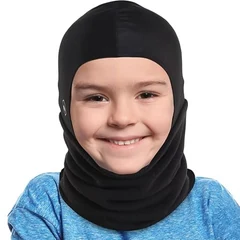
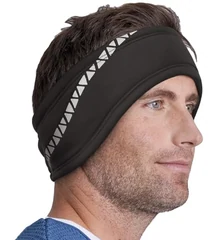
Sources
- Cold and Work: Types, Causes, Preparation, National Institute for Occupational Safety and Health, CDC. Read 14 September 2026.